Visual reading
How to read tarot symbols without memorizing every meaning
A tarot card is not a vocabulary flash card. Read it as an image in a particular position, beside other images, in response to a real question.
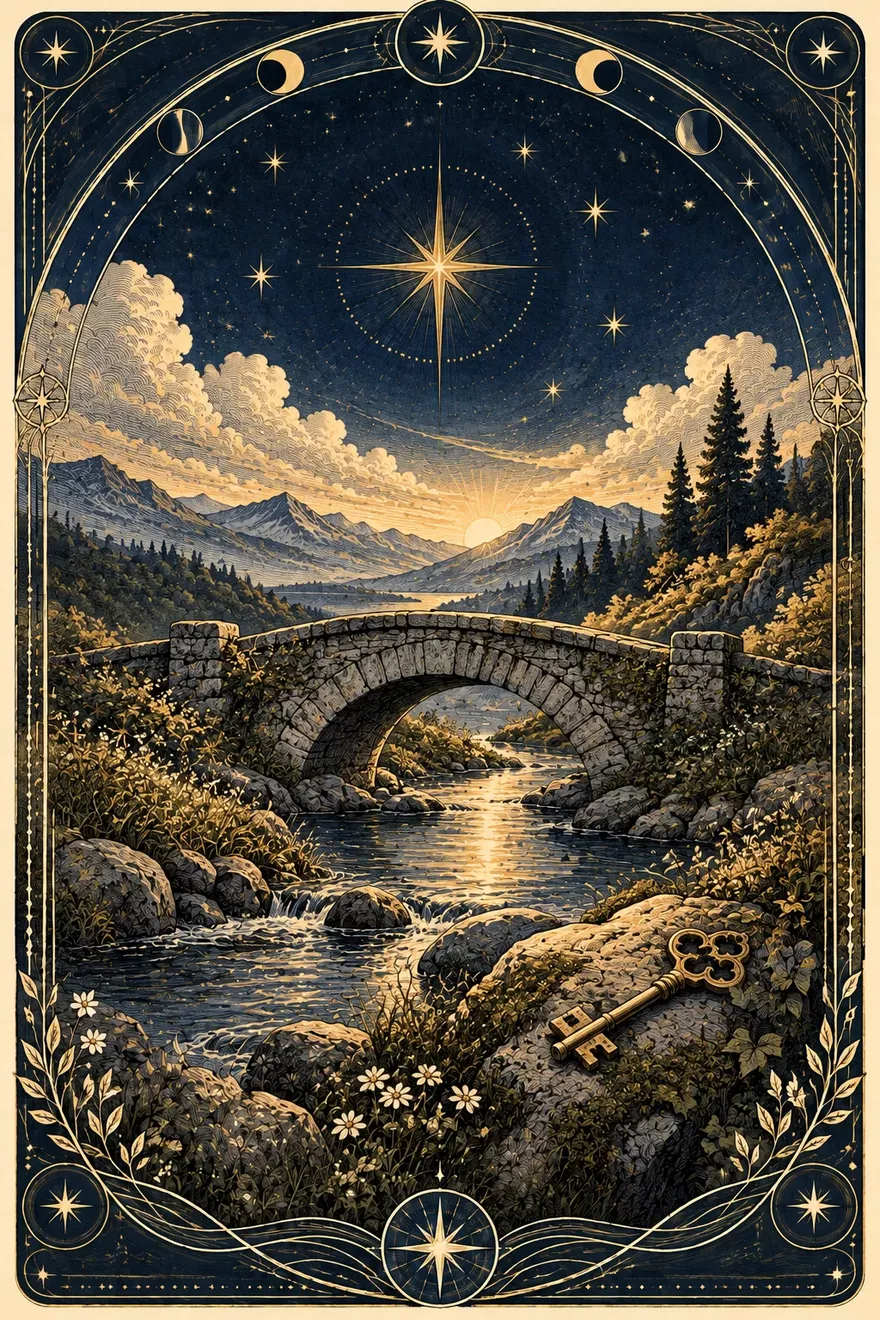
Describe the picture first
Before opening a guidebook, spend a minute with what is actually present. Who appears active or still? What seems close, distant, protected, exposed, balanced, or unstable? Where does the eye go first? Description slows down the reflex to force an image into a familiar keyword.
Separate observation from association. “A figure faces away from two cups” is observable. “They regret a relationship” is an interpretation. The distinction does not make the second sentence invalid; it makes the reasoning visible and easier to revise.
Use four layers of context
- The deck: What does this artist’s imagery and accompanying text emphasize?
- The position: Is the card describing a resource, tension, perspective, or possible response?
- The spread: What repeats or contrasts across the neighboring cards?
- The question: Which interpretation speaks to the actual issue without inventing facts?
A symbol has cultural histories as well as personal associations. Learn the deck creator’s stated references where possible, especially when imagery comes from a culture or religious tradition outside your own. Personal intuition should not erase that context.
Let relationships between cards carry meaning
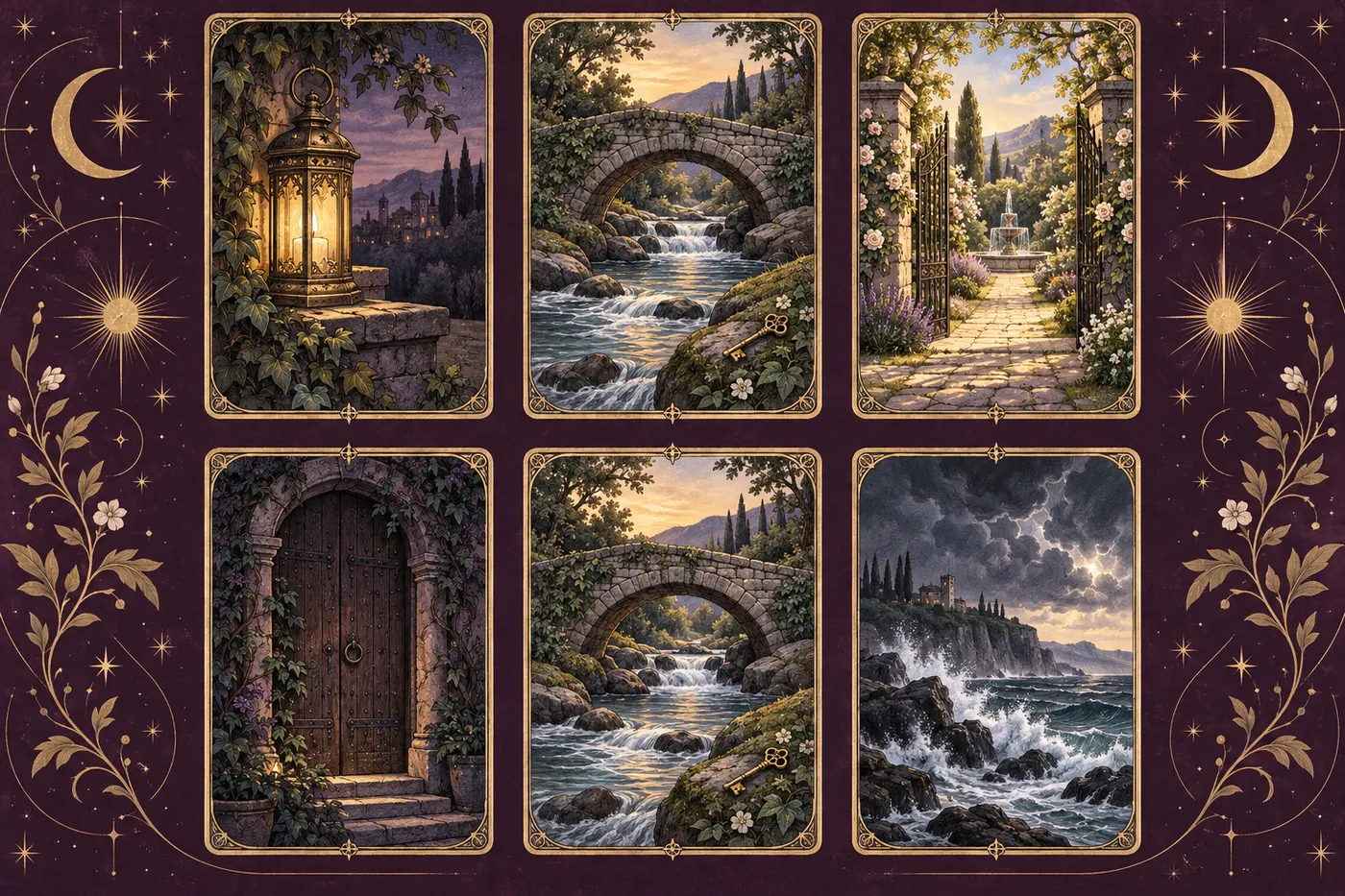
Visual direction can create a conversation. Figures may face one another or look away; one card may be crowded while the next is spacious. A repeated color might connect two positions, while a sudden shift of suit can mark a change from feeling to action or from ideas to material limits.
Patterns matter, but coincidence remains possible. Three Swords may make communication or conflict worth examining; they do not prove that a specific betrayal occurred. Use the pattern to form a question you can test: “What has not been said clearly?”
Hold difficult cards with proportion
Death, the Devil, and the Tower can feel alarming because their names and images are dramatic. In reflective reading, Death often helps examine endings and transition; the Devil can raise questions about attachment, consent, shame, or constrained choice; the Tower can explore disruption and structures that no longer hold. None of these cards certifies literal disaster.
Positive-looking cards also need proportion. The Sun may invite clarity or vitality, but it does not guarantee success. Every card can be read for resource, tension, excess, and absence. This range prevents the deck from collapsing into “good” and “bad” fortune.
Build your own evidence trail
Keep a record with the date, question, deck, position, observations, two possible interpretations, and the action you chose. Return later to see which reading was useful—not whether a card magically predicted an event. Over time, the journal reveals where you read carefully and where hopes or fears took over.