Palm line map
Major palm lines: a clear, non-predictive guide
The names sound definitive, but they are traditional labels for flexion creases and reading conventions. First locate the lines; only then consider the stories palmists have attached to them.
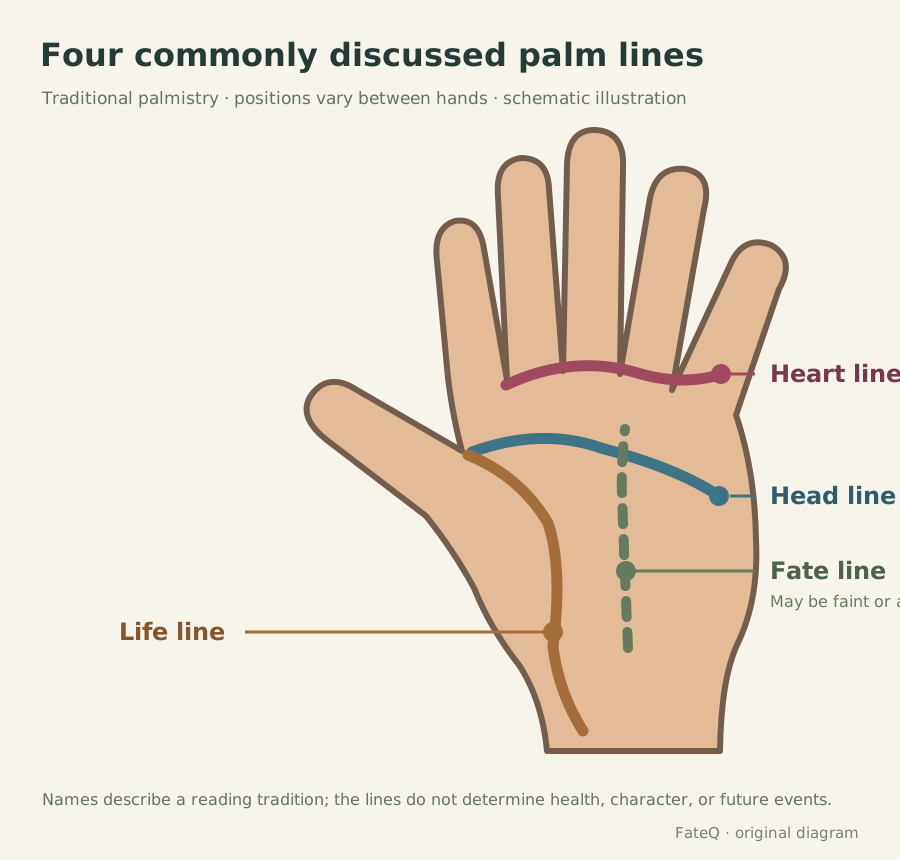
Heart line: the upper transverse crease
The heart line is the prominent crease running across the upper palm beneath the fingers. In palmistry traditions, readers associate it with emotional expression, attachment, and what a person seeks in connection. That association does not reveal someone’s private feelings. A useful prompt is: How do I tend to show care, and what do I need to state more directly?
Head line: the middle transverse crease
The head line generally crosses the middle of the palm, often beginning near the life line between thumb and index finger. Traditional readings connect its direction and quality with attention, decision-making, and styles of thought. Crease length is not a measure of intelligence. Use it to ask whether a current problem needs analysis, imagination, conversation, or a pause.
Life line: the curve around the thumb mound
The life line arcs from the area between thumb and index finger around the fleshy mound at the thumb’s base. Despite its name, it does not show how long someone will live. Palmistry sources have variously linked it with vitality, rootedness, major changes, or a person’s felt relationship to security. None of those meanings is a health assessment.
If this line becomes a prompt, keep it present-focused: What currently restores my energy? Which routines make daily life feel supported? Concerns about fatigue, pain, circulation, or other symptoms belong with a qualified health professional, not a palm reading.
Fate line: a variable vertical line
The fate line—sometimes called the Saturn line—is usually described as a vertical line rising through the center of the palm toward the middle finger. It may be strong, partial, forked, or absent. Traditional readers connect it with vocation, external demands, and the degree to which life seems organized around a direction.
An absent fate line is normal and is not evidence of a purposeless life. The symbolic question is simply: Where am I choosing direction, and where am I responding to circumstances?
Lines are not isolated data points
Hands crease because they move, and no clean diagram can reproduce all variation. Avoid assigning a dramatic meaning to one break, cross, island, or faint segment. If you choose to read symbolically, compare the feature with the rest of the hand, the person’s own account, and the possibility that it means nothing beyond normal variation.